News Fatigue: What It Is and How to Get Your Attention Back
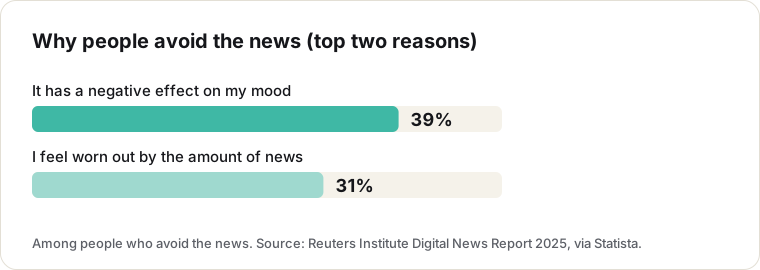
News fatigue is feeling worn out by the sheer amount of news, to the point where you tune out. In the Reuters Institute's 2025 survey, 31% of people who avoid the news said they feel worn out by how much of it there is. The fix is usually less volume, not less information: fewer sources, set times, and formats that tell you what happened and then stop.
On this page
What News Fatigue Is
News fatigue is the feeling of being worn out by the news: too many stories, too many updates, the same crises week after week. It usually ends the same way, with people tuning out.
It is common. In the Reuters Institute’s 2025 Digital News Report, 31% of people who avoid the news said they feel worn out by the amount of it, and 39% said the news has a negative effect on their mood. In the 2026 report, 42% of people said they sometimes or often avoid the news.
News Fatigue vs News Anxiety
The two often come together, but they are different:
- News anxiety is worry and dread about what is happening. Read our guide to news anxiety.
- News fatigue is exhaustion from the volume. You may not feel anxious at all, just tired of hearing about it.
The remedies overlap, but fatigue responds especially well to cutting the volume.
What Causes News Fatigue
- Volume. Live blogs, alerts and feeds publish updates all day, even when little has changed.
- Long-running stories. Wars, elections and economic crises dominate for months.
- Repetition across sources. Following many outlets and social accounts means seeing the same story many times, with a new opinion each time.
- No sense of progress. Much coverage reports the latest turn without telling you what it means.
How to Get Your Attention Back
- Cut your sources. A few reliable newsrooms are enough for the main facts. Wire services such as Reuters, AP and AFP report what happened with little commentary.
- Set times. Decide when you check the news, and leave it alone the rest of the day.
- Use short formats. A briefing or a few short videos give you the day’s main stories in minutes.
- Go deep selectively. Pick one or two stories you care about and follow those properly. Skim the rest.
- Take real breaks. A weekend off does not make you uninformed. Big stories will still be there on Monday.
A Short Daily Routine
- Morning, five minutes: the main stories from one or two reliable sources.
- Evening, ten minutes: anything new on the stories you follow, plus one longer piece if you have the energy.
- Alerts: only for genuinely urgent news.
This is the habit Aplomb is built for: a few minutes of short videos from vetted newsrooms, then you are done.
Want a calmer way to follow the news? Aplomb shows short videos from vetted newsrooms, no endless feed of opinions.
Newsrooms Mentioned in This Guide
FAQ
What is news fatigue?
The exhaustion people feel from the volume of news, especially when big stories run for months. It often leads to tuning out entirely.
Is news fatigue the same as news anxiety?
They overlap. News anxiety is about worry and dread; news fatigue is about being worn out by the amount of news. Many people feel both.
How do I get over news fatigue?
Cut the volume: pick a few reliable sources, check the news at set times, turn off most alerts, and use short formats. Then add back depth only for the stories you care about.
More Guides