News Anxiety: How to Stay Informed Without Feeling Overwhelmed
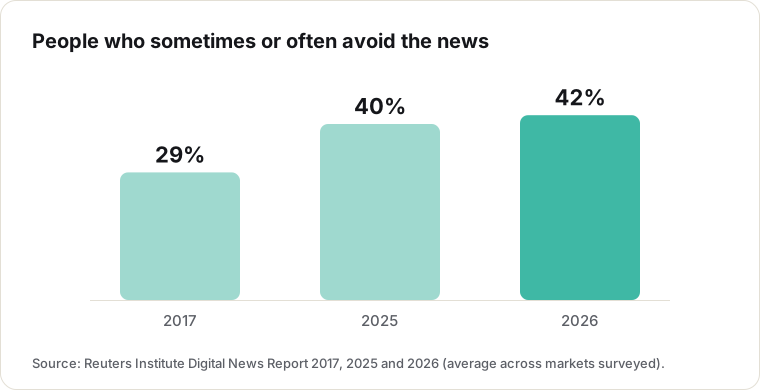
News anxiety is the stress or dread that comes from following the news. It is common: in the Reuters Institute's 2026 survey, 42% of people said they sometimes or often avoid the news. You don't have to quit to feel better. Check the news at set times, turn off most alerts, follow a few reliable newsrooms instead of endless feeds, and stop when you know what happened.
On this page
What News Anxiety Is
News anxiety is the stress, worry or dread that comes from following the news. It tends to grow when the news is constant, mostly about threats you can’t control, and reaches you through alerts and feeds that never end.
It is widespread. In the Reuters Institute’s 2026 Digital News Report, 42% of people across the markets surveyed said they sometimes or often avoid the news, up from 29% when the Institute started asking in 2017. In its 2025 report, the most common reason avoiders gave was that the news has a negative effect on their mood (39%), followed by feeling worn out by the amount of news (31%).
Why the News Can Feel Overwhelming
- It never stops. Phones, alerts and feeds deliver news all day, so there is never a natural point where you are done.
- Negative stories travel further. Conflict, disasters and outrage get more clicks and shares, so feeds fill up with them.
- Opinions multiply the story. One event comes with dozens of reactions, hot takes and arguments, which take more time and energy than the facts themselves. Over weeks, this can turn into news fatigue.
- Little of it is actionable. Much of what you read is about things you can’t change, which can leave you feeling powerless.
Researchers have started to measure the effect. A 2024 study of university students in Iran and the United States found that doomscrolling, the habit of scrolling through bad news (how to stop doomscrolling), was associated with higher existential anxiety. The study shows a link, not proof that one causes the other.
Six Habits That Keep You Informed With Less Stress
- Choose set times. Check the news once or twice a day, for example after breakfast and early evening, rather than whenever your phone lights up. Avoid it just before bed.
- Turn off most alerts. Keep one or two for genuinely urgent news, and switch off the rest.
- Follow fewer, better sources. A few reliable newsrooms, such as wire services and public broadcasters, give you the facts with less commentary. Our list of news sources shows how independent raters score each one.
- Prefer formats with an end. A short briefing or a handful of short videos tells you what happened and then stops. An endless feed is designed to keep you going. Our today’s top stories page is one example: the day’s main stories, one short video each, and then you are done.
- Separate news from opinion. Read the report first. Commentary is optional, and it is where most of the arguing happens.
- Notice how you feel. If you feel worse after checking the news, shorten the session or skip a day. Staying informed is a long-term habit, not a duty to read everything.
When Avoiding the News Becomes a Problem
Taking breaks is healthy. Cutting the news out entirely has costs: you can miss decisions that affect your health, money or community, and it gets harder to come back. The goal is a limit that works for you, not zero.
If worry about the news is constant, affects your sleep or daily life, or comes with other symptoms of anxiety, talk to a doctor or a mental health professional.
A 10-Minute News Routine
If you want a starting point, try this for a week:
- Morning, 5 minutes. Look at the day’s main stories, the ones most newsrooms are covering, and stop there. You will know what happened.
- Pick one story to go deeper, if you want to. Read one full report from a reliable newsroom rather than ten reactions to it.
- Evening, 5 minutes. Check what changed during the day. Skip it if nothing you care about was in the morning list.
- No news in the last hour before bed, and no alerts except the one or two you chose.
After a week, notice whether you feel less tense and whether you missed anything important.
How Aplomb Fits In
We built Aplomb for people who want to stay informed without the noise. The app opens on Today: the day’s main stories, ranked by how many newsrooms are covering them right now, one short video each, and a clear “You’re up to date” at the end. Every video comes from one of our vetted newsrooms and names the outlet, and there are no comments, likes or creator channels. You can see today’s top stories on this site without installing anything. It is one option among several; the habits above work with any app.
Want a calmer way to follow the news? Aplomb shows short videos from vetted newsrooms, no endless feed of opinions.
Newsrooms Mentioned in This Guide
FAQ
What is news anxiety?
The stress, worry or dread people feel from following the news, especially when it is constant and mostly bad. It is not a medical diagnosis, but it can affect your mood and sleep. If anxiety is persistent or hard to manage, talk to a doctor or a mental health professional.
Is it OK to avoid the news?
Taking breaks is fine, and many people do: 42% of people in the Reuters Institute's 2026 survey said they sometimes or often avoid the news. Total avoidance has a cost, though, since you miss things that affect your life. Limiting when and where you get the news is usually a better balance.
How do I stay informed without getting anxious?
Pick a fixed time or two each day, use a few reliable sources rather than social feeds, turn off non-essential alerts, and favor formats with a clear end, such as a short briefing or a handful of videos, over endless scrolling.
Does short video news make anxiety worse?
It depends on the feed. Algorithmic feeds full of reactions and opinions can keep you scrolling. A short feed of official reports from known newsrooms gives you the facts quickly and lets you stop.
More Guides